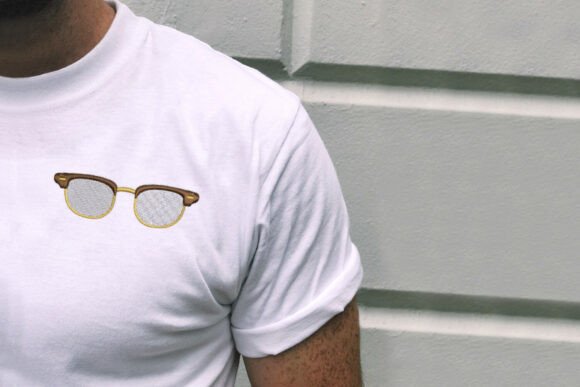
Review: Vintage Horn Rim Glasses Embroidery Design
As a designer who spends more time staring at stitch maps than actual fabric, I have learned that the difference between a charming handmade item and a cluttered mess often comes down to the simplicity of the motif. When I first loaded the Vintage Horn Rim Glasses Embroidery file into my editing software, I was immediately struck by its clean lines and nostalgic appeal. It is not just an icon; it is a statement piece that bridges the gap between retro aesthetics and modern minimalism. For those of us running small embroidery businesses or crafting personalized gifts, finding a design that scales well and reads clearly from a distance is rare. This design promises versatility, but does it hold up under the needle? Let’s dig into the practical realities of using this asset in real-world projects.
First Impressions: Mood and Visual Personality
The immediate mood created by this design is one of intellectual charm and vintage cool. The shape of the horn rim glasses is distinct, avoiding the generic look of standard eyewear icons. The layout is balanced, with a visual weight that feels substantial without being heavy. What appeals to me most is the potential for customization. The description notes that you can make them sunglasses or reading glasses based on your choice of thread for the lens color. This is a crucial detail for a designer. It means the digitizer has likely left the lens area open for creative interpretation, rather than locking you into a single look.
In terms of detail level, the design avoids excessive micro-stitching. This is a positive sign for production speed and thread breakage prevention. The visual personality is adaptable; it feels equally at home on a hipster’s tote bag as it does on a grandmother’s reading case. For an embroidery project that needs to communicate personality quickly, this graphic delivers.
Real-World Application: From Tote Bags to Sweatshirts
I recently tested this concept while preparing a custom order for a local bookstore owner who wanted branded merchandise. We decided to use the Vintage Horn Rim Glasses Embroidery on canvas tote bags. The result was striking. On the textured surface of the canvas, the stitches held their definition beautifully. The horns of the frames provided a nice anchor for the eye, drawing attention to the center of the bag.
Beyond totes, I see immense potential for this design in custom apparel. Imagine this stitched on the chest pocket of a denim jacket or the sleeve of a flannel shirt. The retro vibe pairs perfectly with workwear trends. For sweatshirt embroidery, the design works well because it doesn’t require a massive hoop size to be legible. A 4x4 inch hoop is likely sufficient for the medium sizes, making it cost-effective for production.
For Etsy sellers and small shop product creators, this design is a goldmine for niche marketing. It appeals to teachers, librarians, writers, and anyone who identifies with the "bookish" aesthetic. Creating a line of personalized gift items, such as embroidered aprons for book clubs or patches for laptop bags, could drive significant engagement. The ability to swap thread colors for the lenses allows you to create seasonal variations—dark lenses for summer sunglasses themes, or clear/light threads for winter reading nook vibes.
Technical Performance and Stitch Quality
When evaluating any machine embroidery design, I look closely at stitch types. While I cannot verify the exact stitch count without opening the specific file, the visual output suggests a combination of satin stitch for the frames and potentially a fill stitch or simple running stitch for details. Satin stitches provide that glossy, premium look that customers associate with high-quality finished product standards. However, satin columns must be kept within a certain width to prevent snagging. The horn rims appear thick enough to support a dense satin fill without compromising integrity.
The inclusion of 8 formats and 10 sizes in the zip file is a standard but essential feature for professional use. It ensures compatibility with various machines, from home hobbyist models to commercial multi-needle units. However, scaling is where many designs fail. When shrinking this design for baby embroidery on onesies or bibs, one must be cautious. The thin arms of the glasses might become too fine to stitch reliably on stretchy knit fabrics. In such cases, checking the stitch density and possibly simplifying the smallest size in your editing software is advisable.
Fabric Considerations and Stabilization
The success of this Accessories category design heavily depends on the substrate. On stable fabrics like cotton twill, denim, or canvas, the design will shine. The crisp lines of the horn rims will stand out against the weave. However, on textured fabrics like terry cloth or fluffy fleece, some of the finer details might get lost. If you are stitching on a towel or blanket, consider using a topping stabilizer to keep the stitches sitting on top of the pile rather than sinking in.
For curved surfaces like caps, placement is critical. The symmetrical nature of the glasses means they must be centered perfectly. Any deviation is immediately noticeable to the human eye. I recommend using a magnetic hoop or a cap frame with precise marking tools. Also, when working on dark fabric, ensure your thread colors have enough contrast. A black frame on a navy shirt might disappear, so opt for contrasting tones or add a subtle white underlay if your machine settings allow.
Commercial Viability and Brand Consistency
For commercial embroidery and craft business owners, consistency is key. This design offers a strong visual anchor for brand identity. If you are selling digital embroidery file assets or finished goods, the professional look of the horn rims adds perceived value. It looks intentional, not clip-art-ish. This builds customer trust. When a buyer sees a clean, well-digitized image on your printable mockup or live listing, they anticipate a high-quality handmade product.
Moreover, the design’s versatility supports diverse marketing angles. You can position it as a fun accessory for summer (sunglasses) or a cozy essential for winter (reading glasses). This duality extends the shelf life of your inventory. For holiday embroidery gifts, pairing this design with a witty quote about reading or sunbathing could create best-selling items for Q4.
Practical Designer Notes for Best Results
Before you commit to a full production run, here are my top recommendations for getting the most out of the Vintage Horn Rim Glasses Embroidery:
- Test on Scrap First: Always stitch out the design on the same fabric type you intend to use for the final product. Check for puckering or thread breaks.
- Check Thread Contrast: Experiment with different lens colors. Try metallic threads for a luxe look or variegated threads for a playful vibe.
- Review Stitch Density: If the design feels too stiff after stitching, reduce the density slightly in your software, especially for lightweight fabrics.
- Confirm Hoop Size: Ensure the size you select fits comfortably within your hoop with adequate margin for clamping.
- Inspect Small Details: Zoom in on the bridge and temples of the glasses. Ensure there are no unnecessary jump stitches or loose ends.
- Use Proper Stabilizer: Match your stabilizer to your fabric. Cut-away for knits, tear-away for wovens, and wash-away for delicate materials.
- Verify Licensing: Before selling finished items or using the design in commercial products, confirm the license terms provided with the download. Most designers allow commercial use for physical goods, but digital resale is usually restricted.
Final Verdict
The Vintage Horn Rim Glasses Embroidery is a solid addition to any designer’s library. It balances aesthetic appeal with technical practicality. While it requires careful attention to fabric choice and stabilization, particularly for smaller sizes, its versatility makes it a valuable asset for Apparel decorators, makers, and creative entrepreneurs. Whether you are creating a quirky embroidered patch or a sophisticated boutique branding element, this design delivers a polished, professional look that resonates with today’s consumers. It is a reminder that sometimes, the simplest shapes tell the strongest stories.